 jobsintra.com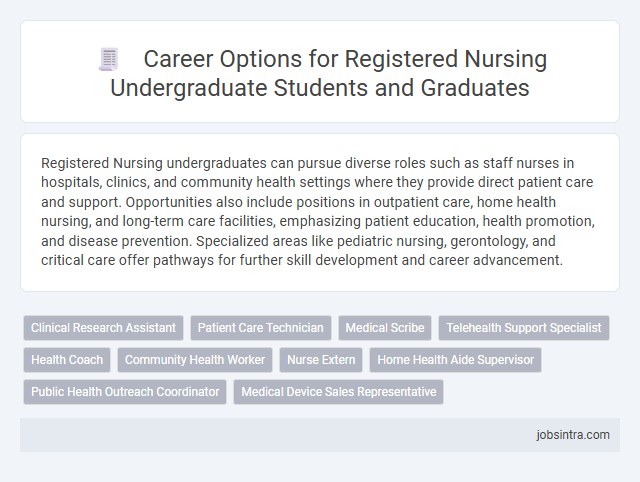
Registered Nursing undergraduates can pursue diverse roles such as staff nurses in hospitals, clinics, and community health settings where they provide direct patient care and support. Opportunities also include positions in outpatient care, home health nursing, and long-term care facilities, emphasizing patient education, health promotion, and disease prevention. Specialized areas like pediatric nursing, gerontology, and critical care offer pathways for further skill development and career advancement.
Clinical Research Assistant
Registered Nursing undergraduates working as Clinical Research Assistants support clinical trials by collecting and analyzing patient data to enhance treatment outcomes. They collaborate with medical professionals to ensure adherence to research protocols and maintain accurate documentation for regulatory compliance. This role sharpens critical thinking and clinical skills, paving the way for advanced nursing or research positions.
Patient Care Technician
Registered Nursing undergraduates can pursue a role as a Patient Care Technician, providing essential support to nursing staff by assisting with basic patient care tasks such as monitoring vital signs, helping with mobility, and ensuring patient comfort. This position enhances clinical experience and develops hands-on skills critical for advancing a nursing career. Working as a Patient Care Technician offers valuable exposure to patient interactions and healthcare team dynamics in various medical settings.
Medical Scribe
A Registered Nursing undergraduate can leverage their clinical knowledge to work as a Medical Scribe, accurately documenting patient encounters and assisting healthcare providers with electronic medical records. This role enhances your understanding of medical terminology and healthcare workflows while supporting efficient patient care. Working as a Medical Scribe builds valuable experience for future nursing or healthcare roles by improving communication and documentation skills.
Telehealth Support Specialist
Registered Nursing undergraduates can excel as Telehealth Support Specialists by utilizing their clinical knowledge to assist patients remotely, ensuring effective communication between healthcare providers and patients through digital platforms. This role enhances access to care, allowing you to provide guidance, monitor patient progress, and troubleshoot technical issues in virtual health settings. Expertise in nursing fundamentals combined with technology proficiency makes this position ideal for improving patient outcomes outside traditional clinical environments.
Health Coach
Registered Nursing undergraduates can leverage their clinical knowledge and communication skills to become effective Health Coaches. These professionals guide clients in developing personalized wellness plans, improving lifestyle habits, and managing chronic conditions. Your nursing background provides a strong foundation for promoting holistic health and motivating behavior change.
Community Health Worker
Registered Nursing undergraduates can pursue roles as Community Health Workers, where they support public health initiatives by providing education and resources to underserved populations. This job involves assessing community needs, promoting healthy behaviors, and connecting individuals with healthcare services to improve overall wellness. Your nursing knowledge enhances communication and advocacy efforts, making a significant impact on community health outcomes.
Nurse Extern
Nurse Extern positions provide valuable hands-on experience for Registered Nursing undergraduates, bridging academic knowledge with clinical practice. These roles involve assisting registered nurses with patient care, performing basic nursing tasks, and gaining exposure to hospital workflows. Nurse Externships enhance clinical skills and improve readiness for licensure exams while offering networking opportunities in healthcare settings.
Home Health Aide Supervisor
Registered Nursing undergraduates can excel as Home Health Aide Supervisors, overseeing in-home care for patients requiring medical support. This role involves managing aides, coordinating care plans, and ensuring compliance with health regulations to improve patient outcomes. Your clinical knowledge and leadership skills are essential to provide quality care and mentor home health aides effectively.
Public Health Outreach Coordinator
Registered Nursing undergraduates can excel as Public Health Outreach Coordinators by developing and implementing community health programs that address local health needs. They engage with diverse populations to promote preventive care, organize health education workshops, and collaborate with healthcare providers and organizations. This role leverages nursing knowledge to enhance public health outcomes and increase awareness of critical health issues.
Good to know: jobs for Registered Nursing undergraduate
Diverse Career Paths in Nursing
What career opportunities are available for Registered Nursing undergraduates? Diverse career paths in nursing span clinical care, research, education, and healthcare administration. Your nursing degree equips you with skills applicable in hospitals, community health, policy development, and specialized nursing roles.
Clinical Practice Opportunities for RN Graduates
Registered Nursing undergraduates have numerous clinical practice opportunities that prepare them for diverse healthcare settings. These roles focus on hands-on patient care, critical thinking, and effective communication within multidisciplinary teams.
- Staff Nurse - Provides direct patient care in hospitals, managing treatments and monitoring patient progress.
- Clinical Nurse Specialist - Offers expert guidance in specialized areas such as cardiology or oncology to improve patient outcomes.
- Community Health Nurse - Delivers healthcare services and education in community settings, emphasizing preventive care and health promotion.
Non-Clinical Roles for Registered Nurses
Registered Nursing undergraduates have a variety of non-clinical career options available beyond traditional bedside care. These roles leverage clinical knowledge while focusing on administrative, educational, or research-related responsibilities.
Health care management positions allow registered nurses to oversee operations, improve patient care systems, and coordinate staff effectively. Nurse educators develop training programs and teach future nursing professionals, enhancing the quality of health education.
Clinical documentation specialists play a critical role in ensuring accurate medical records, impacting billing and compliance. Nurse informaticists combine nursing expertise with information technology to optimize electronic health records and data management.
Research coordinators assist in designing and managing clinical trials that contribute to medical advancements. Public health nurses often transition into policy development and community health program management, influencing population health outcomes.
Advanced Education and Specialization Options
Registered Nursing undergraduates have a wide range of advanced education and specialization options available to enhance their careers. Pursuing a Master of Science in Nursing (MSN) or a Doctor of Nursing Practice (DNP) enables them to take on leadership roles in healthcare.
Specializations such as Nurse Practitioner, Clinical Nurse Specialist, Nurse Anesthetist, and Nurse Midwife offer pathways to advanced clinical practice. These roles demand additional certifications and prepare nurses for complex patient care responsibilities in various medical settings.
In-Demand Nursing Fields and Emerging Trends
Registered Nursing undergraduates have diverse career opportunities in rapidly growing healthcare sectors. Specializations in high demand include geriatrics, mental health, and telehealth nursing.
Job prospects for registered nurses are expanding due to an aging population and increasing chronic conditions. Fields like home health nursing and nurse informatics are emerging as vital roles. Expertise in technology integration and patient-centered care enhances job stability and growth potential.
Work Settings for Registered Nurses
| Work Setting | Job Roles | Key Responsibilities | Typical Employers |
|---|---|---|---|
| Hospitals | Staff Nurse, Charge Nurse, Critical Care Nurse | Patient assessment, administering medications, coordinating care plans | Public and private hospitals, specialty medical centers |
| Outpatient Clinics | Clinic Nurse, Ambulatory Care Nurse | Patient triage, wound care, health education | Community health centers, specialty clinics |
| Long-Term Care Facilities | Geriatric Nurse, Staff Nurse | Chronic disease management, daily living assistance, rehabilitation support | Nursing homes, assisted living facilities |
| Home Health Care | Home Care Nurse | Personalized patient care, medication management, monitoring recovery | Home health agencies, private care services |
| Schools and Educational Institutions | School Nurse | Health screenings, immunizations, health counseling | Public and private schools, universities |
| Public Health Organizations | Public Health Nurse | Disease prevention, community health education, immunization programs | Government health departments, NGOs |
| Research and Academia | Nurse Researcher, Educator | Clinical research, nursing education, curriculum development | Universities, research institutes |
Steps to Transition from Student to Professional Nurse
Registered Nursing undergraduates have various job opportunities, including roles as Staff Nurses, Nurse Educators, and Clinical Coordinators. Transitioning from student to professional nurse involves completing licensure exams such as the NCLEX-RN and obtaining state-specific certifications. Gaining clinical experience through residencies or internships supports skill development and smooth integration into healthcare teams.