 jobsintra.com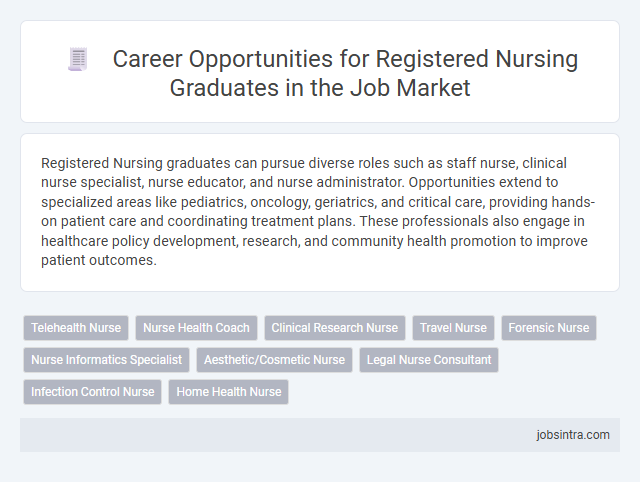
Registered Nursing graduates can pursue diverse roles such as staff nurse, clinical nurse specialist, nurse educator, and nurse administrator. Opportunities extend to specialized areas like pediatrics, oncology, geriatrics, and critical care, providing hands-on patient care and coordinating treatment plans. These professionals also engage in healthcare policy development, research, and community health promotion to improve patient outcomes.
Telehealth Nurse
Registered Nursing graduates can pursue a career as a Telehealth Nurse, providing remote patient care through virtual consultations and monitoring. This role utilizes technology to assess symptoms, educate patients, and coordinate treatment plans without in-person visits. You can leverage your nursing skills to improve access to healthcare for patients in diverse locations.
Nurse Health Coach
Registered Nursing graduates can pursue a rewarding career as a Nurse Health Coach, where they combine clinical expertise with motivational strategies to support patients in managing chronic conditions and achieving wellness goals. Your skills in patient education and personalized care enable you to guide individuals toward healthier lifestyles and improved long-term outcomes. This role blends nursing knowledge with coaching techniques to empower patients in making sustainable health changes.
Clinical Research Nurse
Registered Nursing graduates can pursue careers as Clinical Research Nurses, where they coordinate and manage patient care during clinical trials. They ensure the safety of participants, collect and analyze data, and collaborate with multidisciplinary teams to advance medical knowledge. This role combines nursing expertise with research skills to contribute to the development of new treatments and therapies.
Travel Nurse
Registered Nursing graduates can pursue opportunities as travel nurses, providing healthcare services in diverse locations across the country or internationally. This role offers exposure to various medical settings, enhancing clinical skills and adaptability while addressing staffing shortages in hospitals and clinics. Travel nurses enjoy competitive pay, flexible schedules, and the chance to explore new environments while making a significant impact on patient care.
Forensic Nurse
Forensic nurses specialize in caring for victims of violence and collecting crucial medical evidence for legal cases. Your expertise bridges healthcare and law enforcement, working in settings such as hospitals, crime labs, and legal systems. This career offers opportunities to contribute to justice while providing compassionate patient care.
Nurse Informatics Specialist
Registered Nursing graduates can pursue a career as a Nurse Informatics Specialist, where they integrate nursing knowledge with information technology to improve patient care and healthcare systems. This role involves managing electronic health records, analyzing data for clinical decision-making, and training staff on new healthcare technologies. Expertise in both nursing practices and IT systems is essential to enhance care quality and operational efficiency.
Aesthetic/Cosmetic Nurse
Registered Nursing graduates can pursue a rewarding career as an Aesthetic or Cosmetic Nurse, specializing in enhancing patients' appearance through non-surgical treatments such as Botox, dermal fillers, and laser therapy. This role requires a strong understanding of skin anatomy, patient care, and aesthetic techniques to ensure safe and effective procedures. Your skills in patient assessment and communication are crucial for achieving natural, satisfying results and maintaining client trust.
Legal Nurse Consultant
Registered Nursing graduates can leverage their clinical expertise by becoming Legal Nurse Consultants, bridging healthcare knowledge with the legal system. Your skills in patient care and medical terminology make you invaluable in analyzing medical records, assisting in case evaluations, and providing expert opinions. This role offers a rewarding career path that combines nursing with legal investigations and litigation support.
Infection Control Nurse
Registered Nursing graduates can pursue careers as Infection Control Nurses, specializing in monitoring and preventing healthcare-associated infections. These professionals develop and implement infection control protocols, conduct staff training, and collaborate with healthcare teams to ensure patient safety. Their expertise is critical in maintaining sterile environments and reducing the risk of disease transmission in hospitals and clinics.
Good to know: jobs for Registered Nursing graduates
Expanding Roles for Registered Nurses in Healthcare
Registered Nursing graduates are finding increasing opportunities beyond traditional bedside care. Expanding roles for Registered Nurses include positions in healthcare management, public health, and advanced clinical practice.
Nurses can work as nurse educators, case managers, or clinical nurse specialists, contributing to improved patient outcomes. Your skills are essential in telehealth services and healthcare informatics, reflecting the evolving landscape of modern healthcare.
In-Demand Specializations for Nursing Graduates
Registered Nursing graduates have diverse job opportunities in hospitals, clinics, and community health settings. Specializations such as critical care nursing, pediatric nursing, and geriatric nursing remain highly in demand due to growing healthcare needs. Your expertise in these areas can significantly enhance patient care and career growth prospects.
Employment Settings for RNs: Hospitals, Clinics, and Beyond
Registered Nursing graduates find diverse employment opportunities across multiple healthcare settings. Your skills open doors to hospitals, clinics, and various community-based environments.
- Hospitals - Provide critical patient care in fast-paced, high-acuity environments like emergency rooms and intensive care units.
- Clinics - Offer outpatient care, assisting in preventive health and routine medical services within specialty and primary care clinics.
- Community Health - Work in schools, public health organizations, and home healthcare to support wellness and chronic disease management.
Employment options for Registered Nurses extend well beyond traditional settings, enhancing career flexibility and growth.
Advanced Practice and Further Education Pathways
Registered Nursing graduates have diverse career opportunities, including roles as Nurse Practitioners, Clinical Nurse Specialists, Nurse Anesthetists, and Nurse Midwives. Advanced practice nursing positions require specialized graduate education, such as Master's or Doctoral degrees, to provide comprehensive patient care and lead healthcare initiatives. Your further education pathways may include pursuing a Doctor of Nursing Practice (DNP) or a PhD in Nursing, opening doors to leadership, research, and academic roles.
Salaries and Job Outlook for Registered Nurses
Registered Nursing graduates have a variety of job opportunities in healthcare settings, including hospitals, clinics, and long-term care facilities. The demand for Registered Nurses is expected to grow significantly, reflecting an increasing need for skilled healthcare professionals.
- Median Salary - Registered Nurses earn a median annual salary of approximately $77,600, with variations depending on location and experience.
- Job Growth Projection - Employment of Registered Nurses is projected to grow 9% from 2022 to 2032, faster than the average for all occupations.
- Work Environment Variety - Jobs are available in diverse settings such as hospitals, outpatient centers, schools, and home healthcare services, offering multiple career paths.
Skills and Competencies Employers Seek in New RNs
What job opportunities are available for Registered Nursing graduates? Registered Nursing graduates can pursue careers in hospitals, clinics, long-term care facilities, and community health organizations. These roles often include staff nurse, nurse educator, and case manager positions.
Which skills do employers prioritize when hiring new Registered Nurses? Employers seek strong clinical skills, critical thinking abilities, and effective communication in new RNs. Competencies in patient assessment, care planning, and teamwork are essential for success in diverse healthcare environments.
How important is adaptability for new Registered Nurses in the workforce? Adaptability is crucial for new RNs due to the fast-paced and ever-changing nature of healthcare settings. Employers value nurses who can quickly adjust to new protocols, technologies, and patient needs.
What competencies help new Registered Nurses excel in patient care? Proficiency in patient education, empathy, and attention to detail are key competencies employers seek. These skills improve patient outcomes and satisfaction, making them highly desirable in clinical roles.
Why are technological skills essential for Registered Nursing graduates? New RNs must navigate electronic health records, medical devices, and telehealth platforms efficiently. Employers look for candidates who are tech-savvy to enhance patient care and streamline documentation processes.
International and Remote Nursing Opportunities
Registered Nursing graduates possess skills that open doors to diverse careers worldwide. Remote nursing offers innovative opportunities to provide care beyond traditional settings.
- Telehealth Nurse - Provides virtual patient consultations and monitors chronic conditions using digital platforms.
- International Healthcare Volunteer - Delivers nursing care in underserved regions, supporting global health initiatives.
- Remote Case Manager - Coordinates patient care plans and resources remotely, ensuring continuity across healthcare systems.