 jobsintra.com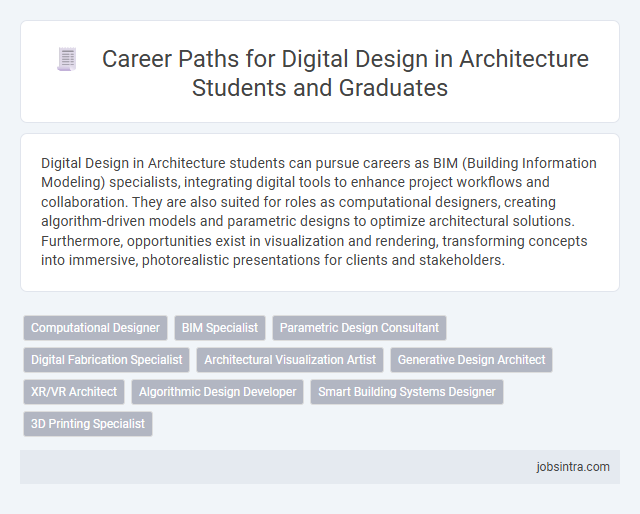
Digital Design in Architecture students can pursue careers as BIM (Building Information Modeling) specialists, integrating digital tools to enhance project workflows and collaboration. They are also suited for roles as computational designers, creating algorithm-driven models and parametric designs to optimize architectural solutions. Furthermore, opportunities exist in visualization and rendering, transforming concepts into immersive, photorealistic presentations for clients and stakeholders.
Computational Designer
Computational Designers in architecture leverage programming skills and digital tools to create innovative design solutions and optimize building performance. They develop algorithms and parametric models that enable customizable and efficient architectural forms. Your expertise in both design principles and computational techniques makes you invaluable in pushing the boundaries of architecture through technology.
BIM Specialist
A BIM Specialist leverages advanced Building Information Modeling software to create detailed digital representations of architectural projects, enhancing collaboration and efficiency throughout the design and construction process. This role requires strong skills in 3D modeling, data management, and interdisciplinary coordination, making it ideal for Digital Design in Architecture students seeking to integrate technology with architectural expertise. Your ability to translate design intent into precise, programmable models positions you as a key contributor in modern architecture and construction projects.
Parametric Design Consultant
Parametric Design Consultants specialize in creating advanced digital models that optimize architectural forms and structures using algorithmic processes. They collaborate with architects and engineers to develop innovative solutions that enhance building performance and aesthetics through computational design. Mastery of software like Grasshopper, Rhino, and Dynamo is essential for transforming complex design concepts into efficient, buildable projects.
Digital Fabrication Specialist
A Digital Fabrication Specialist in architecture combines advanced digital tools with construction techniques to create precise, innovative building components. You apply skills in 3D modeling, CNC machining, and robotic fabrication to translate complex designs into physical structures efficiently. This role bridges design and production, enhancing both creativity and accuracy in architectural projects.
Architectural Visualization Artist
Architectural Visualization Artists transform architectural plans into stunning 3D models and realistic renderings, helping clients and designers visualize projects before construction begins. They use software such as AutoCAD, SketchUp, and 3ds Max to create detailed digital representations that highlight materials, lighting, and spatial relationships. This role bridges creative design and technical expertise, making it essential in marketing, presentations, and decision-making within architectural firms.
Generative Design Architect
Generative Design Architects leverage advanced algorithms and computational tools to create innovative architectural solutions that optimize form, function, and sustainability. By integrating your digital design skills with parametric modeling and AI-driven processes, you can revolutionize traditional architectural workflows and produce highly efficient, adaptive structures. This role demands a blend of creativity and technical expertise, positioning you at the forefront of architectural innovation.
XR/VR Architect
Digital Design in Architecture students can excel as XR/VR Architects, creating immersive virtual environments that allow clients and collaborators to explore architectural designs before construction begins. Your expertise in 3D modeling, spatial analysis, and interactive media enables the development of realistic and engaging simulations for presentations, training, and urban planning. This role combines creativity with technology to transform architectural visualization and enhance decision-making processes.
Algorithmic Design Developer
Algorithmic Design Developers in architecture specialize in creating computational tools and scripts to automate and optimize design processes. They utilize programming languages such as Python and Grasshopper to generate complex geometries and enhance parametric modeling workflows. Their expertise bridges creative design and technology, enabling innovative architectural solutions through algorithm-driven methods.
Smart Building Systems Designer
Smart Building Systems Designers integrate advanced technologies to create intelligent, efficient, and sustainable architectural environments. This role involves optimizing building performance through automation, energy management, and IoT integration, enhancing both functionality and user experience. Your expertise in digital design tools positions you to innovate within this growing field, bridging architecture and technology seamlessly.
Good to know: jobs for Digital Design in Architecture students
Emerging Roles in Digital Architectural Design
Emerging roles in digital architectural design include computational designer, BIM specialist, and virtual reality architect. These positions require expertise in software such as Rhino, Grasshopper, Revit, and Unreal Engine to create innovative and efficient building solutions. Your skills in parametric modeling and digital visualization position you well for these forward-thinking career paths.
Essential Digital Skills for Architecture Careers
What essential digital skills should Architecture students develop for successful careers in digital design? Mastery of 3D modeling software such as Rhino and Revit is crucial for creating accurate architectural visualizations. Proficiency in parametric design and BIM (Building Information Modeling) enables efficient project collaboration and data management.
Which digital tools are most valuable for Architecture students focusing on digital design? Software like AutoCAD and SketchUp remain foundational for drafting and conceptual modeling. Skills in rendering tools such as V-Ray and Lumion enhance presentation quality and client communication.
How do programming and scripting languages benefit Architecture students in digital design roles? Knowledge of Python or Grasshopper scripting allows for automation of repetitive tasks and customization of design workflows. This capability increases productivity and fosters innovative architectural solutions.
Why is proficiency in virtual reality (VR) and augmented reality (AR) important for digital design in architecture? VR and AR technologies improve spatial understanding and enable immersive client presentations. Competence in these tools gives students a competitive edge in cutting-edge architectural visualization.
What role does data analysis and management play in digital design careers in architecture? Effective handling of project data supports sustainable and performance-driven design strategies. Familiarity with software for energy modeling and environmental simulation is increasingly demanded in the profession.
Industry Sectors Hiring Digital Design Architects
| Industry Sector | Job Roles for Digital Design Architecture Students | Key Skills and Technologies | Top Employers |
|---|---|---|---|
| Architectural Design Firms | Digital Design Architect, BIM Specialist, Computational Designer | Revit, AutoCAD, Rhino, Grasshopper, 3D Modeling, Parametric Design | Gensler, Foster + Partners, Zaha Hadid Architects |
| Construction and Engineering | Digital Fabrication Specialist, BIM Coordinator, 3D Visualization Artist | Navisworks, BIM 360, 3D Printing, Laser Scanning | Bechtel, AECOM, Turner Construction |
| Urban Planning and Development | Urban Digital Designer, GIS Analyst, Smart City Planner | GIS Software, CityEngine, Data Visualization, Simulation Tools | Arup, Jacobs, Stantec |
| Technology and Software Companies | Software Developer for Architecture, UX Designer, Product Specialist | Python, C++, API Development, UX/UI Design, VR/AR Integration | Autodesk, Trimble, Bentley Systems |
| Interior Design and Visualization Studios | 3D Visualizer, VR Experience Designer, Digital Content Creator | 3ds Max, V-Ray, Unreal Engine, Adobe Creative Suite | IDEO, HOK, Perkins and Will |
Your expertise in digital design opens doors across diverse industry sectors, connecting you with an array of innovative roles. Focusing on these industries enhances career pathways in architecture with cutting-edge technologies and creative workflows.
Digital Tools and Software Proficiency
Digital Design in Architecture students possess specialized skills in advanced software such as AutoCAD, Revit, Rhino, and Grasshopper. Proficiency in Building Information Modeling (BIM) and parametric design tools enables them to create accurate, scalable architectural models.
Careers include roles like BIM Coordinator, Digital Design Specialist, and Computational Designer, where software expertise drives project efficiency. Mastery of visualization tools like 3ds Max, Lumion, and Adobe Creative Suite supports creating compelling client presentations and virtual walkthroughs.
Portfolio Development for Digital Design Careers
Digital design skills open diverse career paths in architecture, making your portfolio a crucial tool for showcasing talent. Building a strong portfolio tailored to digital design can position you for success in competitive job markets.
- Architectural Visualization Specialist - Create realistic 3D renderings and animations that communicate design concepts effectively.
- BIM Coordinator - Manage Building Information Modeling workflows to improve project collaboration and efficiency.
- Digital Fabrication Technician - Utilize CNC machines and 3D printing to produce physical models from digital designs.
Advancing in Digital Architecture: Certification and Education
Digital design skills are transforming career opportunities for architecture students by enabling them to create innovative, technology-driven architectural solutions. Pursuing advanced certifications and education in digital architecture enhances proficiency in cutting-edge software and design methodologies.
- Building Information Modeling (BIM) Specialist Certification - Validates expertise in BIM software like Autodesk Revit, crucial for efficient project management and collaboration.
- Parametric Design Courses - Equip students with knowledge in algorithmic modeling tools such as Grasshopper and Dynamo to create dynamic, responsive architectural forms.
- Virtual Reality and Visualization Training - Develops skills in immersive technologies and rendering software that enhance client presentations and design evaluation.
Networking and Professional Growth in Digital Design
Digital Design in Architecture offers diverse career paths such as BIM Specialist, Virtual Reality Designer, and Computational Designer. These roles require strong skills in software like Revit, Rhino, and Grasshopper to create innovative architectural solutions.
Networking plays a critical role in advancing your career by connecting you with industry professionals and potential employers. Attending workshops, conferences, and online forums focused on digital design can expand your professional circle and expose you to emerging technologies. Building relationships within architecture firms and digital design communities fosters collaboration and opens opportunities for growth.