 jobsintra.com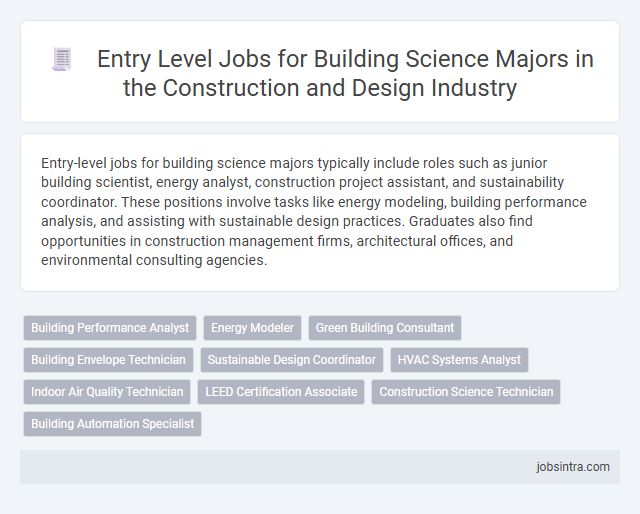
Entry-level jobs for building science majors typically include roles such as junior building scientist, energy analyst, construction project assistant, and sustainability coordinator. These positions involve tasks like energy modeling, building performance analysis, and assisting with sustainable design practices. Graduates also find opportunities in construction management firms, architectural offices, and environmental consulting agencies.
Building Performance Analyst
Building Performance Analyst roles offer entry-level opportunities for building science majors to evaluate and optimize the energy efficiency and sustainability of structures. These professionals analyze building systems, interpret energy consumption data, and recommend improvements to enhance occupant comfort while reducing environmental impact. Your expertise in building science allows you to contribute to creating safer, more efficient buildings that meet modern performance standards.
Energy Modeler
Energy Modelers analyze and simulate building performance to optimize energy efficiency in new and existing structures. They use specialized software to create models that predict heating, cooling, lighting, and ventilation needs, helping to reduce energy consumption and costs. Your expertise in building science can lead to opportunities with architectural firms, engineering consultancies, and sustainability organizations focused on green building design.
Green Building Consultant
Green Building Consultant roles offer entry-level building science majors opportunities to apply knowledge of sustainable design, energy efficiency, and environmental impact assessments. You will analyze building projects to recommend eco-friendly materials and systems that meet green certification standards. This position combines technical expertise with environmental stewardship to support sustainable construction practices.
Building Envelope Technician
Building Science majors entering the job market can excel as Building Envelope Technicians, where they assess and improve the outer shell of buildings to enhance energy efficiency and durability. You will conduct inspections, perform diagnostic tests, and recommend solutions to prevent air and moisture infiltration. This role combines technical skills with hands-on problem-solving to ensure structures meet performance standards.
Sustainable Design Coordinator
Sustainable Design Coordinators in building science contribute to energy-efficient and eco-friendly construction projects by applying green building principles and materials. Entry-level roles involve assisting in LEED certification processes, conducting environmental impact assessments, and collaborating with design teams to optimize building performance. These positions require knowledge of sustainability standards, energy modeling software, and a commitment to reducing carbon footprints in the built environment.
HVAC Systems Analyst
HVAC Systems Analysts specializing in building science play a critical role in optimizing heating, ventilation, and air conditioning systems to enhance energy efficiency and indoor air quality. Entry-level positions often involve conducting system performance assessments, analyzing data to identify inefficiencies, and assisting in the design of sustainable HVAC solutions. These roles provide hands-on experience with building performance technologies and contribute to creating environmentally responsible, cost-effective climate control systems.
Indoor Air Quality Technician
An Indoor Air Quality Technician specializes in assessing and improving the air quality within buildings by identifying pollutants and ensuring compliance with health standards. You will utilize specialized equipment to collect air samples, conduct ventilation tests, and recommend solutions to enhance indoor environments. This entry-level position is essential for creating healthier, safer living and working spaces.
LEED Certification Associate
LEED Certification Associate professionals play a crucial role in sustainable building design and construction by assisting in the certification process of environmentally friendly structures. Entry-level positions often involve supporting green building projects, conducting energy efficiency assessments, and helping prepare documentation for LEED credits. Your expertise in building science combined with LEED knowledge makes you valuable in firms focusing on sustainable architecture, construction management, and environmental consulting.
Construction Science Technician
Construction Science Technicians support project planning and management by preparing technical drawings, conducting site inspections, and assisting with materials testing. They play a crucial role in ensuring compliance with building codes and safety standards during the construction process. Entry-level positions often involve collaboration with engineers, architects, and contractors to facilitate efficient project execution.
Good to know: jobs for building science majors entry level
Overview of Building Science Careers in Construction and Design
Building science majors have a wide range of entry-level career opportunities in construction and design fields. These roles emphasize energy efficiency, sustainable materials, and improving building performance.
- Energy Analyst - Focuses on evaluating building energy use and recommending improvements for sustainability and cost savings.
- Building Envelope Specialist - Works on the design and testing of roofs, walls, and windows to enhance insulation and weatherproofing.
- HVAC Design Technician - Assists in planning heating, ventilation, and air conditioning systems to optimize indoor air quality and energy consumption.
Essential Skills for Entry-Level Building Science Professionals
Entry-level building science professionals often begin as building performance analysts, energy modelers, or construction document reviewers. Essential skills include proficiency in energy simulation software, understanding of HVAC systems, and knowledge of building codes and standards. You must also demonstrate strong analytical abilities and effective communication to collaborate with architects and engineers.
Top Entry-Level Job Titles for Building Science Graduates
Building science majors possess specialized knowledge that integrates architecture, engineering, and environmental technology. Entry-level roles in this field offer practical experience in sustainable design, energy efficiency, and construction management.
- Energy Analyst - Evaluates building energy consumption and recommends improvements for efficiency and sustainability.
- Building Envelope Technician - Assesses and tests the exterior components of buildings to ensure structural integrity and energy performance.
- Construction Materials Tester - Conducts laboratory and field tests on construction materials to meet safety and quality standards.
Your expertise in building science can lead to impactful positions that contribute to innovative, energy-conscious architecture and construction projects.
Key Responsibilities and Daily Tasks in Starter Roles
Building science majors possess specialized knowledge in materials, energy efficiency, and environmental systems, making them valuable in the architecture field. Entry-level roles focus on applying scientific principles to optimize building performance and sustainability.
Your key responsibilities include assisting with energy modeling, conducting building envelope analysis, and supporting compliance with green building standards. Daily tasks often involve collecting data on insulation, moisture control, and indoor air quality, as well as collaborating with architects and engineers to improve designs. You will also help prepare technical reports and contribute to material testing and site inspections.
Core Industries Hiring Building Science Majors
| Core Industry | Entry-Level Job Titles | Key Skills Required | Why This Industry Hires Building Science Majors |
|---|---|---|---|
| Architecture Firms | Junior Building Scientist, Sustainability Analyst, Energy Modeler | Building performance analysis, energy modeling, sustainable design principles | To optimize building efficiency, integrate sustainable systems, and apply scientific principles to improve building design |
| Construction Companies | Building Science Technician, Materials Testing Assistant, Site Energy Auditor | Material properties, site inspections, energy auditing, construction best practices | To ensure materials and construction methods meet performance standards and achieve energy efficiency goals |
| Environmental Consulting | Building Performance Consultant, Indoor Air Quality Analyst, Energy Efficiency Specialist | Data analysis, environmental regulations, HVAC systems knowledge, air quality testing | To assess and improve environmental impact of buildings, ensuring compliance with green standards |
| Government Agencies | Energy Code Compliance Officer, Building Inspector, Sustainability Coordinator | Energy codes, building regulations, inspection protocols, sustainability assessment | To enforce building codes, promote sustainable practices, and improve community energy efficiency |
| Real Estate Development | Sustainability Analyst, Building Science Associate, Project Coordinator | Market analysis, sustainable building techniques, project management | To incorporate energy-efficient designs and sustainable materials ensuring long-term value and compliance |
Your expertise in building science opens doors to these core industries, ensuring buildings meet modern efficiency and sustainability standards.
Required Certifications and Credentials for Beginners
Building science majors entering the architecture field can expect to pursue roles such as building analyst, energy modeler, or sustainability consultant. These positions require a solid understanding of construction technology, energy efficiency, and material performance.
Required certifications for beginners often include LEED Green Associate and Fundamentals of Building Science (FBS). Your credentials demonstrate expertise in sustainable design and energy systems, enhancing job prospects at entry-level positions.
Career Advancement Opportunities from Entry-Level Positions
Building science majors entering the architecture field can access various entry-level roles that serve as a foundation for career growth. These positions provide essential hands-on experience with sustainable design, construction technology, and energy efficiency.
- Facade Engineer - Focuses on the design and performance analysis of building envelopes, enabling expertise in material innovation and thermal dynamics.
- Energy Modeler - Conducts simulations to optimize building energy consumption, developing skills valuable for green certification and sustainability consulting.
- Construction Project Assistant - Supports project managers with site coordination and quality control, building a comprehensive understanding of project workflows and construction management.